
🏊 URGENT COMMUNITY ALERT |
Honolulu EMS Warns Parents After Keiki Near-Drownings Nearly Double on Oʻahu |
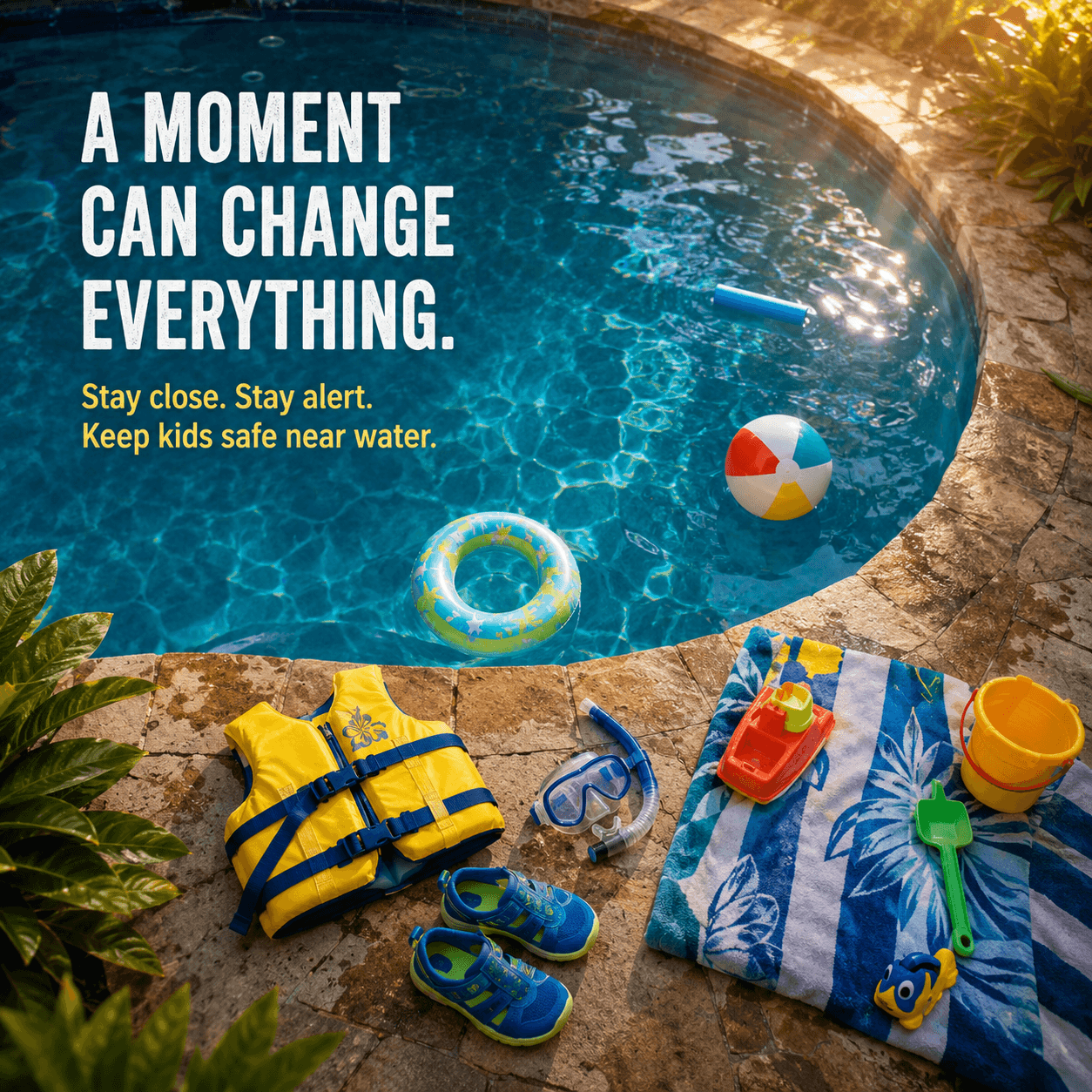
HONOLULU — Honolulu EMS is sounding the alarm after a troubling rise in pediatric near-drownings across Oʻahu, urging parents and caregivers to stay fully alert whenever keiki are near water. Since the start of 2026, Honolulu EMS has responded to 12 pediatric nonfatal or near-drowning incidents involving children ages 2 to 9, nearly double the number reported during the same period last year, according to the City and County of Honolulu. These incidents happened in places many families consider familiar and safe, including swimming pools, a hot tub, and the ocean. Honolulu Emergency Services Director Dr. Jim Ireland described these cases as heartbreaking for families, witnesses, first responders, and the children involved. He also stressed that many of these emergencies are preventable when children are properly supervised around water. Water-safety advocates are urging families to remember one simple rule: never assume someone else is watching the child. Sarah Fairchild, co-founder of the Hawaiʻi Water Safety Coalition, said weak swimmers should always remain within arm’s reach, and adults should put their phones away when supervising children near water. Why This Matters to Local FamiliesIn Hawaiʻi, water is part of everyday life. From beaches and pools to hot tubs and bathtubs, keiki can be near water almost anywhere. But EMS officials warn that a drowning emergency can happen in seconds, especially when a child slips away unnoticed or when adults are distracted. The danger is not only at the beach. According to Honolulu EMS, most of the reported 2026 incidents happened in swimming pools, reminding families that backyard and hotel pools can be just as dangerous as the ocean when supervision is not constant. What Parents and Guardians Should Do NowBefore any beach day, pool party, hotel staycation, or family gathering near water, designate one adult as the Water Watcher. That person’s only job is to watch the children — no scrolling, no texting, no side conversations, no distractions. Parents should also keep weak swimmers within arm’s reach, teach children basic water safety, consider Coast Guard-approved flotation devices when appropriate, and learn CPR. If a child goes missing, officials say to check the water first and call 911 immediately in an emergency. |
0 Comments
Join the conversation
Be the first to comment
Share your thoughts above.